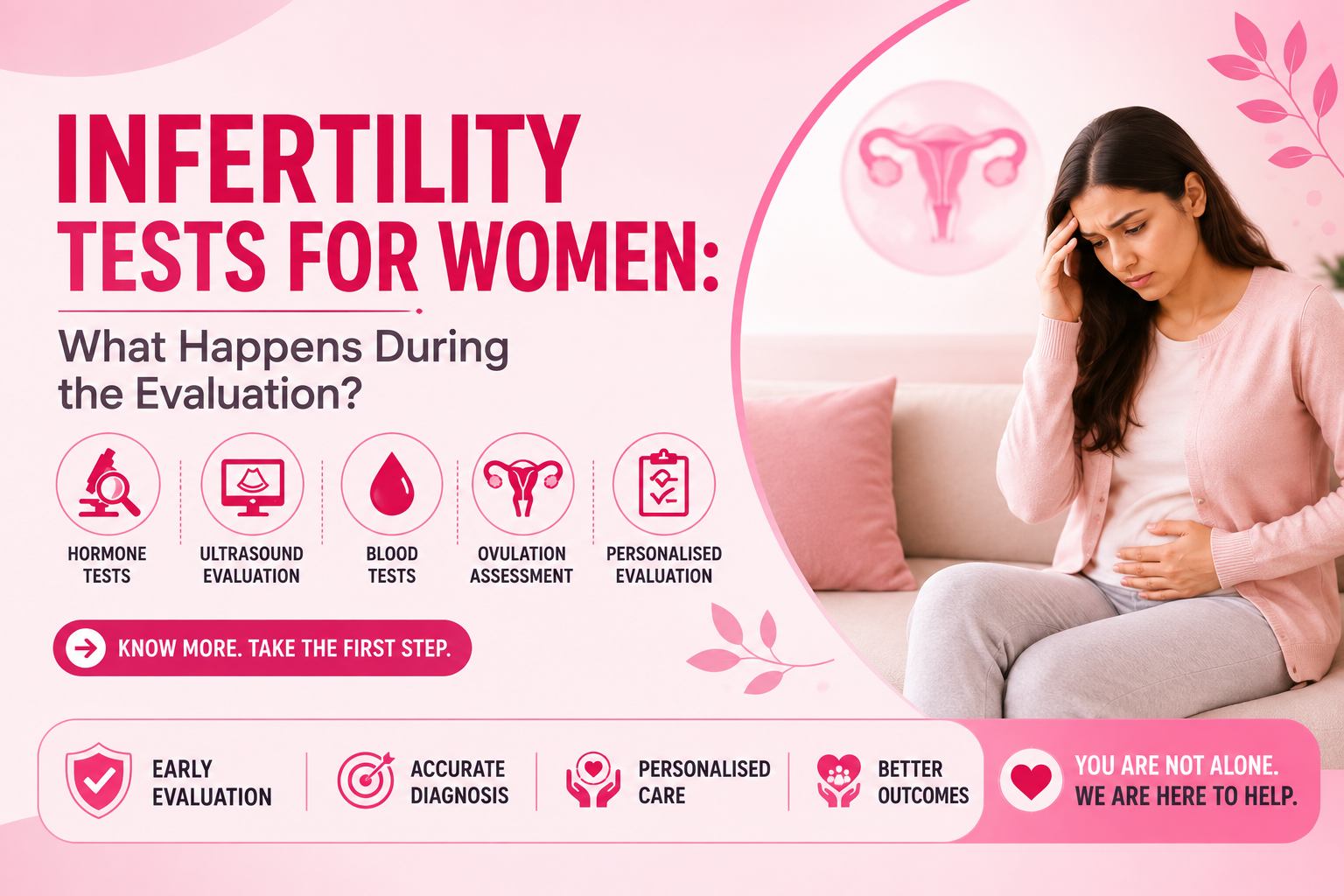
Infertility Tests for Women: What Happens During the Evaluation?
For many women, the journey toward pregnancy begins with excitement and hope. But when pregnancy does not happen despite trying, questions can slowly turn into worry: Why is this happening? Do I need fertility tests? What will the doctor ask me? Will the tests be painful?
The good news is that an infertility evaluation is not about finding fault with a woman. It is about understanding what may be affecting conception and identifying the right path forward. Infertility tests for women help doctors assess ovulation, hormones, the uterus, fallopian tubes and overall reproductive health.
If you have been trying to conceive without success, a consultation with an experienced gynecologist and fertility specialist such as Dr. Madhumita Patel can help you understand which tests may actually be appropriate for your situation.
When Are Infertility Tests for Women Recommended?
Not every woman needs immediate testing. The timing generally depends on age, menstrual history, previous pregnancy history and other individual factors.
A doctor may recommend an infertility evaluation when:
- Pregnancy has not occurred after regular unprotected intercourse for an appropriate period.
- Periods are irregular, very painful or absent.
- There is a history of PCOS, endometriosis or pelvic infection.
- Previous surgery may have affected the reproductive organs.
- There have been recurrent miscarriages.
- There are concerns about ovarian reserve or ovulation.
An evaluation may also be considered earlier depending on age and medical history.
What Happens During a Female Infertility Evaluation?
Imagine a woman named Neha who has been trying to conceive for more than a year. Her periods have never been completely regular, and she is unsure whether she is ovulating every month.
At her first appointment, the doctor does not immediately send her for every possible test. Instead, the evaluation begins with understanding her story.
This is an important part of infertility testing for women.
The doctor may discuss:
- Menstrual cycle pattern and duration
- Previous pregnancies or miscarriages
- Medical and surgical history
- Previous fertility treatments
- Medications and lifestyle factors
- Symptoms such as pelvic pain or abnormal bleeding
Based on this information, appropriate fertility tests for women can be planned.
Common Infertility Tests for Women
The exact tests differ from one woman to another. Some commonly used investigations include:
1. Ovulation Assessment
Ovulation is essential for natural conception. If ovulation is irregular or does not occur, pregnancy may be difficult.
Doctors may use menstrual history, blood tests, ovulation tracking or ultrasound monitoring to understand whether ovulation is occurring.
2. Hormonal Tests
Hormonal blood tests can provide important information about reproductive function. Depending on the situation, doctors may assess hormones associated with ovulation, ovarian function and other endocrine factors.
3. Ultrasound
A pelvic or transvaginal ultrasound can help evaluate the uterus and ovaries. It may help identify conditions such as ovarian cysts, fibroids or other structural concerns.
4. Ovarian Reserve Testing
Some women may require an assessment of ovarian reserve. Tests such as AMH, along with other clinical assessments, can help doctors understand aspects of ovarian function.
Importantly, ovarian reserve testing does not by itself predict whether a woman will definitely become pregnant.
5. Fallopian Tube Evaluation
Open and functioning fallopian tubes are important for natural conception. Depending on the individual case, tests such as HSG may be recommended to check whether the tubes are open.
Why a Personalised Infertility Evaluation Matters
Searching online for female infertility tests can sometimes create unnecessary anxiety because there are many tests available. However, you may not need all of them.
The purpose of an infertility evaluation is to identify the most relevant investigations based on your history and symptoms.
For example, a woman with highly irregular periods may need a different initial evaluation from someone with regular cycles but a history of pelvic surgery.
This personalised approach can make the process more focused and help avoid unnecessary investigations.
Infertility Diagnosis in Women: What Happens After the Tests?
Once the results are available, your doctor reviews them along with your medical history and examination findings. The results may indicate an ovulation-related issue, hormonal concern, structural problem or another possible factor affecting fertility.
Sometimes, all initial tests may appear normal. This does not mean that pregnancy is impossible. Further evaluation or fertility treatment may be discussed depending on the individual circumstances.
Dr. Madhumita Patel can help women understand their fertility evaluation and discuss suitable next steps based on their individual reproductive health needs.
Frequently Asked Questions
1. Are infertility tests for women painful?
Many fertility investigations, such as blood tests and ultrasound, are generally straightforward. Some procedures may cause temporary discomfort, which can vary between individuals.
2. Which test is done first for female infertility?
There is no single test that is appropriate for every woman. Doctors usually begin with medical history and clinical assessment before selecting relevant investigations.
3. Can irregular periods affect fertility?
Yes. Irregular periods can sometimes indicate irregular ovulation, which may affect the chances of conception. The underlying cause needs to be evaluated.
4. Should my partner also be tested?
Yes. Fertility can involve factors affecting either partner or both. A comprehensive fertility evaluation may therefore include assessment of the male partner as well.
5. When should I see an infertility specialist?
The appropriate time depends on age, how long you have been trying and your medical history. If you have concerns about fertility, discussing them with a gynecologist or fertility specialist can provide clarity.
Take the Next Step Toward Understanding Your Fertility
Fertility evaluation does not have to begin with fear or confusion. The right tests can provide useful information about what may be affecting conception and help you understand your options.
If you have been trying to conceive and want professional guidance, consult Dr. Madhumita Patel for a personalised fertility evaluation and gynecological consultation. Understanding your reproductive health is the first step toward making informed decisions about your fertility journey.
If you are looking for the best gynecologist in Delhi? Contact Dr. Madhumita Patel today!!!
Call Now: +91 9870267117, +91 8287939446
Clinic Address: Dr. Madhumita's Women Healthcare, 2441, D-2, Near Exit Gate 2, Vasant Kunj