Adenomyosis: Causes, Symptoms, Diagnosis & Treatment
What is Adenomyosis?
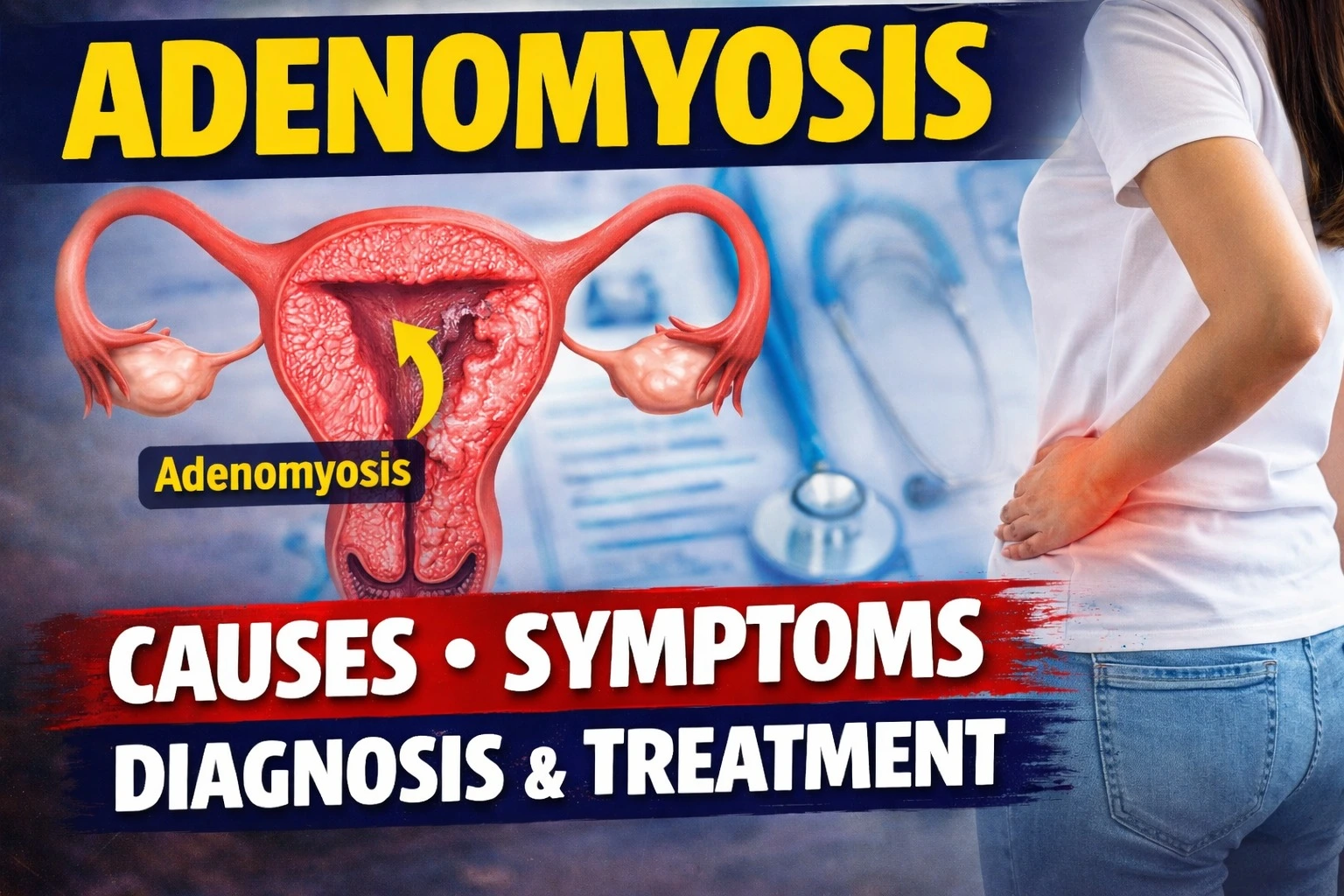
Adenomyosis is a gynecological condition where the inner lining of the uterus (endometrium) grows into the muscular wall of the uterus. This leads to an enlarged uterus and can cause painful and heavy menstrual cycles. Although often confused with endometriosis, adenomyosis is a distinct condition that directly affects the uterine muscle.
Causes of Adenomyosis
The exact cause of adenomyosis is still not fully understood. However, several factors may contribute to its development:
- Hormonal imbalance, especially estrogen dominance
- Uterine inflammation after childbirth or surgery
- Invasive growth of endometrial cells into uterine muscle
- Genetic predisposition
- Age-related changes (commonly affects women aged 35–50)
Symptoms of Adenomyosis
Adenomyosis symptoms can vary from mild to severe. Some women may not experience symptoms at all, while others may face significant discomfort.
Common Symptoms Include the Following:
- Heavy or prolonged menstrual bleeding
- Severe menstrual cramps (dysmenorrhea)
- Chronic pelvic pain
- Pain during intercourse
- Enlarged or tender uterus
- Passing blood clots during periods
If left untreated, adenomyosis can affect quality of life and may lead to anemia due to excessive blood loss.
How is Adenomyosis Diagnosed?
Diagnosing adenomyosis can be challenging because its symptoms overlap with other conditions like fibroids or endometriosis.
Diagnostic Methods:
- Pelvic Examination: To check uterine enlargement
- Ultrasound: Helps identify thickened uterine walls
- MRI Scan: More accurate in confirming adenomyosis
- Medical History Review: Symptoms and menstrual patterns
A proper diagnosis by an experienced gynecologist is crucial for effective treatment.
Treatment Options for Adenomyosis
Treatment depends on the severity of symptoms, age, and future fertility plans.
1. Medications
- Pain relievers (NSAIDs)
- Hormonal therapies (birth control pills, hormonal IUDs)
- GnRH agonists to reduce estrogen levels
2. Minimally Invasive Treatments
- Uterine artery embolization (UAE)
- Endometrial ablation (in selected cases)
3. Surgical Options
- Hysterectomy: Permanent solution for severe cases (recommended when childbearing is complete)
Can Adenomyosis Affect Fertility?
While adenomyosis can impact fertility in some women, many still conceive successfully with proper treatment and medical support. Early diagnosis and personalized care significantly improve reproductive outcomes.
When Should You See a Doctor?
Consult a gynecologist if you experience:
- Extremely painful periods
- Heavy bleeding affecting daily life
- Pelvic pain outside menstruation
- Difficulty conceiving
Early intervention can prevent complications and improve overall well-being.
Expert Advice by Dr. Madhumita Patel
Adenomyosis is a manageable condition when diagnosed early. With advancements in medical technology and individualized treatment plans, most women can lead a healthy and comfortable life. If you are experiencing symptoms, do not ignore them—timely medical consultation is key.
Looking for the best gynecologist in South Delhi? Contact Dr. Madhumita Patel today!
Call Now: +91 9870267117, +91 8287939446
Clinic Address: Dr. Madhumita's Women Healthcare, 2441, D-2, Near Exit Gate 2, Vasant Kunj