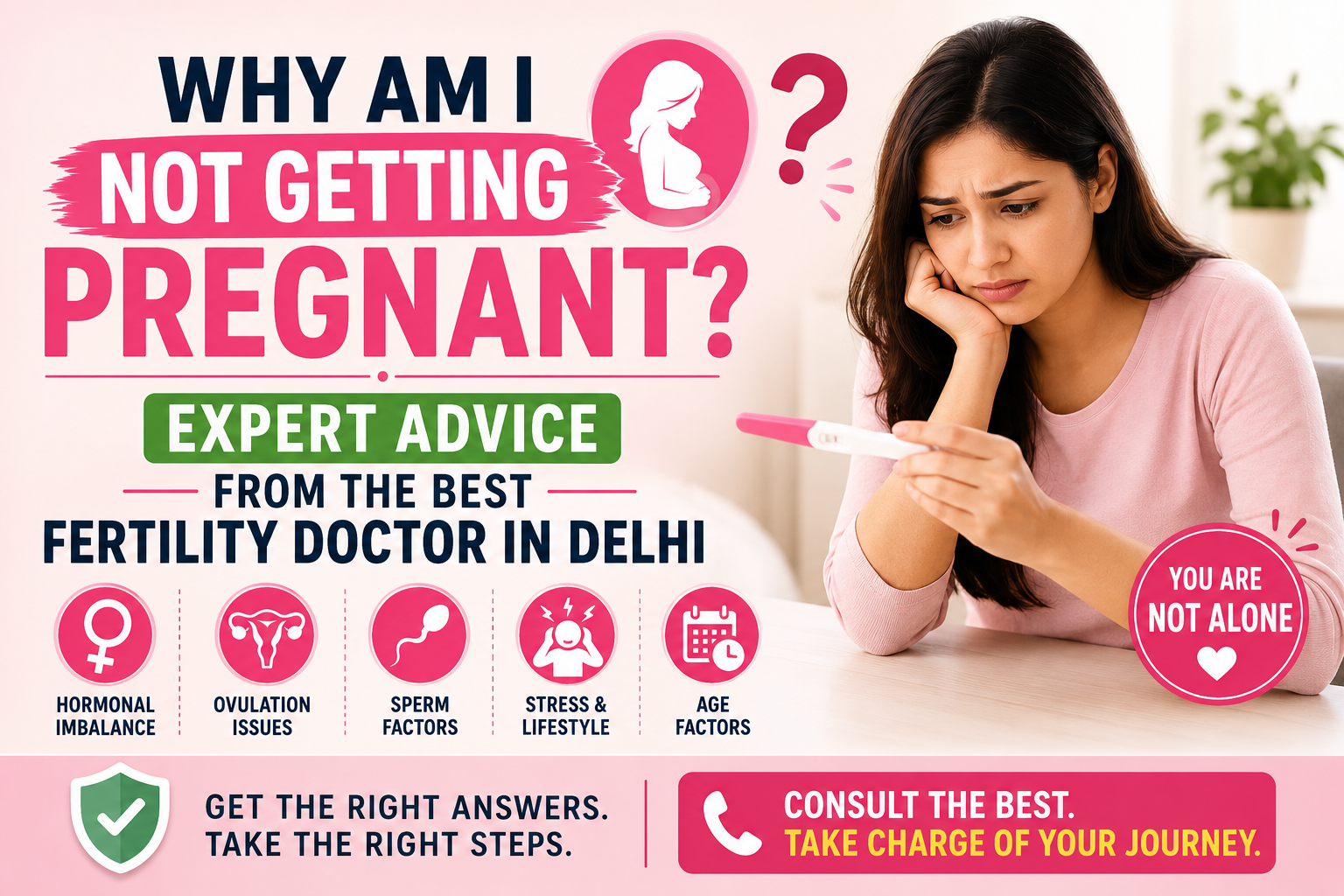
Why Am I Not Getting Pregnant? Expert Advice from the Best Fertility Doctor in Delhi
Trying to conceive can be an exciting journey, but when pregnancy does not happen as expected, it can quickly become stressful. If you have been trying for months without success, you may be asking, "Why am I not getting pregnant?" There can be several reasons, including ovulation problems, age, sperm health, lifestyle factors, or underlying reproductive conditions.
Dr. Madhumita Patel, an experienced fertility specialist, helps couples understand the possible reasons behind difficulty conceiving and guides them toward appropriate evaluation and treatment.
When Should You Consult the Best Fertility Doctor in Delhi?
Pregnancy does not always happen immediately, even when both partners are healthy. However, certain situations indicate that professional evaluation may be helpful.
Consider consulting a fertility specialist in Delhi if:
- You are under 35 and have been trying for more than 12 months.
- You are over 35 and have been trying for more than 6 months.
- Your periods are irregular or absent.
- You have experienced recurrent miscarriages.
- You have PCOS, endometriosis, fibroids, or another reproductive condition.
- Your partner has a known fertility concern.
Early assessment by an infertility specialist in Delhi can help identify potential problems and prevent unnecessary delays in treatment.
Common Reasons Why You May Not Be Getting Pregnant
Every couple has a different fertility journey. Some of the most common causes include the following.
1. Ovulation Problem
Regular ovulation is important for natural conception. Conditions such as PCOS can interfere with ovulation and make pregnancy more difficult.
Possible signs include:
- Irregular periods
- Missed periods
- Excess facial hair
- Unexplained weight changes
A fertility doctor in Delhi can evaluate your menstrual cycle, hormones, and ovulation pattern to understand whether an ovulation problem is affecting conception.
2. Age-Related Fertility Changes
Age is another important factor in female fertility. Fertility gradually declines with age, and the decline becomes more significant in the mid-to-late 30s.
Women planning pregnancy later in life may benefit from discussing their reproductive health with an experienced fertility specialist in Delhi. Depending on individual circumstances, fertility testing or preservation options may also be considered.
3. Male Factor Infertility
Difficulty conceiving is not always related to the woman. Male factors can also contribute significantly to infertility.
These may include:
- Low sperm count
- Reduced sperm movement
- Abnormal sperm shape
- Certain hormonal or medical conditions
For this reason, fertility evaluation should generally consider both partners, rather than focusing only on the woman.
4. Blocked Fallopian Tubes
Fallopian tubes provide the pathway for sperm and egg to meet. Previous infections, endometriosis, pelvic conditions, or certain surgeries can sometimes affect the tubes.
A doctor may recommend appropriate investigations, such as an HSG, to assess whether the fallopian tubes are open.
5. Endometriosis
Endometriosis occurs when tissue similar to the uterine lining grows outside the uterus. It can sometimes affect fertility and may cause symptoms such as:
- Severe menstrual pain
- Pain during intercourse
- Chronic pelvic pain
If these symptoms are affecting your daily life or you are struggling to conceive, seeking an evaluation can be an important step.
A Couple's Fertility Journey Can Have More Than One Cause
Imagine a couple who has been trying to conceive for more than a year. The woman has regular periods, so they assume everything is normal. However, after a complete fertility evaluation, the doctor discovers that ovulation is not occurring consistently, while the partner also has a mild sperm-related concern.
This is why simply asking "Why am I not getting pregnant?" may not have one straightforward answer. Sometimes, more than one factor contributes to fertility challenges.
A detailed assessment helps your doctor understand the complete picture instead of treating an assumed problem.
What Fertility Tests May Be Recommended?
Depending on your medical history and symptoms, a fertility specialist in Delhi may recommend tests such as:
- AMH testing
- Hormonal evaluation
- Ovulation monitoring
- Pelvic ultrasound
- HSG for fallopian tube assessment
- Semen analysis
- Other fertility investigations based on individual needs
The purpose of these tests is not simply to find a problem but to understand which treatment approach, if any, may be appropriate.
Lifestyle Habits That Support Fertility
Medical evaluation is important, but everyday habits can also influence reproductive health. Couples trying to conceive should focus on:
- Maintaining a healthy weight
- Eating a balanced, nutrient-rich diet
- Exercising regularly
- Getting adequate sleep
- Avoiding smoking and excessive alcohol
- Managing ongoing stress
These habits do not replace medical treatment when infertility has an underlying cause, but they can support overall health and reproductive well-being.
How Dr. Madhumita Patel Can Help
Choosing the best fertility doctor in Delhi should involve more than simply looking at a title. Experience, proper evaluation, personalized treatment, and clear communication are all important.
Dr. Madhumita Patel focuses on understanding the individual circumstances of each couple before recommending the next step. Whether fertility challenges are related to PCOS, age, ovulation, endometriosis, male factors, or unexplained infertility, an appropriate evaluation can help couples make informed decisions.
Conclusion
If you keep wondering, "Why am I not getting pregnant?", remember that difficulty conceiving does not necessarily mean that parenthood is out of reach. Fertility can be influenced by several factors, and identifying the underlying cause is often the first step toward appropriate care.
If you have been trying to conceive without success, consider consulting Dr. Madhumita Patel, a trusted fertility specialist in Delhi, for a personalized fertility evaluation.
Book a consultation with Dr. Madhumita Patel today and take an informed step toward understanding your fertility journey.
Frequently Asked Questions
1. When should I see a fertility specialist?
Women under 35 generally should consider an evaluation after 12 months of trying, while women over 35 may benefit from seeking help after six months.
2. Can PCOS make it difficult to get pregnant?
Yes. PCOS can affect regular ovulation and may make conception more difficult, although many women with PCOS successfully become pregnant with appropriate care.
3. Is infertility always caused by the woman?
No. Male factors can also contribute to infertility. Evaluation of both partners is therefore important.
4. Can I get pregnant with low AMH?
Low AMH may indicate reduced ovarian reserve, but it does not automatically mean pregnancy is impossible. Individual fertility assessment is important.
5. What should I do if I am struggling to conceive?
Consider consulting a qualified fertility doctor in Delhi for an appropriate evaluation. Understanding the cause can help determine whether treatment or further testing is needed.
If you are looking for the best gynecologist in Delhi? Contact Dr. Madhumita Patel today!!!
Call Now: +91 9870267117, +91 8287939446
Clinic Address: Dr. Madhumita's Women Healthcare, 2441, D-2, Near Exit Gate 2, Vasant Kunj