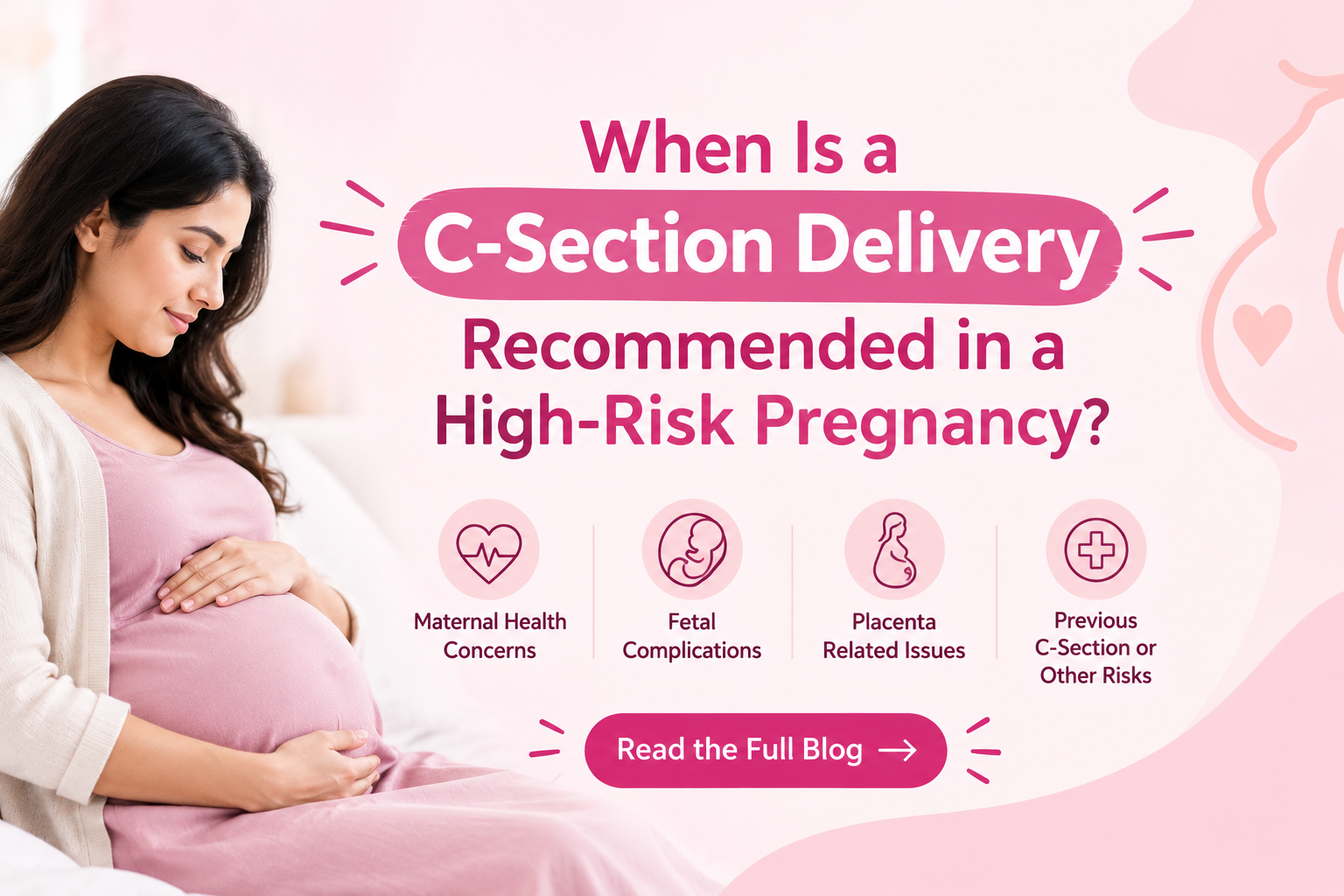
When Is a C-Section Delivery Recommended in a High-Risk Pregnancy?
A pregnancy journey can feel exciting and, at the same time, bring many questions. One of the biggest concerns for women with a high-risk pregnancy is whether they will need a C-section delivery.
The answer is not always straightforward. Having a high-risk pregnancy does not automatically mean that a C-section is required. The mode of delivery depends on the mother's health, the baby's condition, the progress of labour and other factors that your obstetrician carefully monitors throughout pregnancy.
Dr. Madhumita Patel, a pregnancy and gynecology specialist, provides pregnancy care and delivery-related services for women in Delhi, helping expectant mothers understand their options and make informed decisions about childbirth.
What Is a High-Risk Pregnancy?
A pregnancy may be considered high risk when the mother, baby or both have a higher chance of developing complications during pregnancy or delivery.
Some common situations include:
- High blood pressure or pregnancy-related hypertension
- Gestational diabetes that needs close monitoring
- Placenta-related complications
- Multiple pregnancy, such as twins or triplets
- Baby being in an unusual position
- Previous C-section
- Certain heart or medical conditions in the mother
- Poor fetal growth
- Complications during an earlier pregnancy
Being labelled as "high risk" does not mean that something will definitely go wrong. It simply means that pregnancy needs closer monitoring and a carefully planned approach.
When Is a C-Section Delivery Recommended in Pregnancy?
The decision for a C-section delivery is based on individual medical circumstances. In some cases, a planned C-section may be safer than attempting vaginal delivery. In others, labour may begin normally and a C-section may become necessary later.
Here are some common situations where doctors may recommend it.
1. Baby Is in a Breech or Unusual Position
Towards the end of pregnancy, most babies move into a head-down position. If the baby remains breech or lies sideways, vaginal delivery may carry additional risks in certain situations.
Depending on the baby's position, gestational age and other factors, your doctor may recommend a planned C-section delivery.
2. Placenta Problems
Conditions such as placenta previa, where the placenta covers or is very close to the cervix, can make vaginal delivery unsafe.
In such cases, a planned C-section may be advised to reduce the risk of serious bleeding during delivery.
3. Fetal Distress
During labour, doctors continuously monitor the baby's heart rate when required. Changes in the heart rate can sometimes indicate that the baby may not be tolerating labour well.
If the baby needs to be delivered quickly and vaginal delivery is not considered safe or possible, an emergency C-section delivery may be performed.
4. Previous C-Section
A previous C-section does not automatically mean that every future birth must be by C-section.
However, your previous surgery, type of uterine incision, current pregnancy, baby's position and overall health all need to be considered before deciding whether vaginal birth after C-section is appropriate.
5. Multiple Pregnancy
Twin or multiple pregnancies need specialised monitoring. The position of each baby, gestational age, placental location and the mother's health can influence the delivery plan.
In some cases, a C-section delivery may be recommended when vaginal birth could involve additional risks.
6. Certain Maternal Health Conditions
Some medical conditions can make labour more challenging or increase risks for the mother.
For example, severe pregnancy-related high blood pressure or certain heart conditions may require a carefully planned delivery. The doctor will assess the mother's condition and determine the safest approach.
Planned vs Emergency C-Section Delivery
Not every C-section happens suddenly.
Planned C-section
A planned procedure is scheduled in advance when the medical team believes that a C-section is the safer option. This allows the mother to understand the procedure and prepare for delivery.
Emergency C-section
An emergency procedure may become necessary when an unexpected problem develops during pregnancy or labour, such as:
- Significant fetal distress
- Labour not progressing despite appropriate management
- Heavy bleeding
- Certain complications involving the placenta
- Sudden concerns about the mother's or baby's wellbeing
The goal in both situations is the same: to protect the health and safety of the mother and baby.
Does High-Risk Pregnancy Always Mean C-Section?
No.
This is one of the most important things expectant mothers should understand.
A high-risk pregnancy can still result in a vaginal delivery when the mother and baby are stable and there are no medical reasons requiring surgery.
Your delivery plan may change as pregnancy progresses. A decision that seems appropriate at 32 weeks may need to be reassessed at 36 or 38 weeks based on new findings.
This is why regular antenatal check-ups are so important.
How Dr. Madhumita Patel Helps With High-Risk Pregnancy Care?
Every pregnancy is different. Instead of following a fixed delivery plan, Dr. Madhumita Patel evaluates the mother's medical history, pregnancy progress, baby's condition and possible risk factors before recommending a mode of delivery.
Women looking for pregnancy and gynecology care in Faridabad, Vasant Kunj, South Delhi and nearby areas can seek professional guidance to understand their pregnancy and delivery options.
The focus is not simply on choosing vaginal delivery or a C-section delivery. It is about choosing the safest option based on the individual pregnancy.
Frequently Asked Questions
Is C-section necessary for every high-risk pregnancy?
No. A high-risk pregnancy does not automatically require a C-section. The delivery method depends on the specific risk factors and the health of the mother and baby.
When is a C-section usually planned?
A planned C-section may be recommended when the doctor identifies a medical reason that makes vaginal delivery less suitable or potentially unsafe.
Can I have a normal delivery after a previous C-section?
In selected cases, vaginal birth after a previous C-section may be possible. Your doctor will assess your previous surgery, current pregnancy and other individual factors before advising you.
Is an emergency C-section dangerous?
A C-section is a major surgical procedure, but it is commonly performed when medically necessary. In an emergency, the priority is to manage the situation safely and protect both mother and baby.
How do I know which delivery method is right for me?
Your obstetrician can assess your pregnancy, medical history, baby's position, placental condition and other factors to help determine the safest delivery plan.
Conclusion: The Safest Delivery Plan Is Individual
Hearing that your pregnancy is high risk can be worrying, but it does not automatically mean that you will need a C-section. What matters is regular monitoring, timely medical assessment and an individualised delivery plan.
If you are looking for experienced pregnancy and gynecology care in Faridabad, Vasant Kunj or South Delhi, consult Dr. Madhumita Patel to discuss your pregnancy, delivery options and any concerns about C-section delivery.
Book a consultation with Dr. Madhumita Patel to receive personalised guidance for a safe and well-planned pregnancy journey.
Looking for the best gynecologist in Delhi for a high-risk pregnancy? Contact Dr. Madhumita Patel today!!!
Call Now: +91 9870267117, +91 8287939446
Clinic Address: Dr. Madhumita's Women Healthcare, 2441, D-2, Near Exit Gate 2, Vasant Kunj